The benefits and penalties of prepaying your bank loan early come down to two questions: how much interest you’ll save, and whether your loan type lets you repay without a charge. Since 1 January 2026, the second question has an easier answer for many borrowers, but not for everyone.
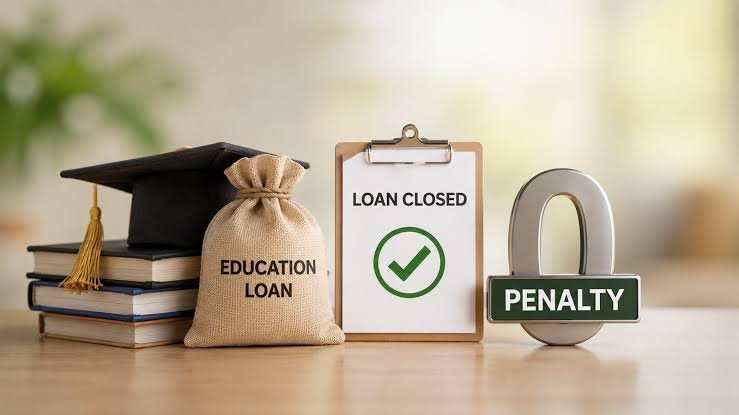
The Benefits
Prepaying pays off most when interest is the biggest part of what you owe.
- Interest saved: on a ₹50 lakh loan at 8.5% for 20 years, with an EMI of about ₹43,391, prepaying ₹5 lakh after two years and keeping the EMI the same would cut the loan by about 3 years and 9 months and save roughly ₹14.6 lakh in interest. That’s my calculation using the standard formula
- Shorter tenure: the loan ends sooner, so you carry the debt for fewer years
- Lower EMI, if you choose: you can keep the tenure and reduce the instalment instead, though shortening the tenure usually saves more interest
- Peace of mind: a smaller balance means less exposure if floating rates rise
Why Early Money Works Hardest
Interest is heaviest at the start, so timing matters.
- In the first year of the example above, about 82% of the first EMI is interest, so principal falls slowly at first
- A rupee prepaid in year two removes interest for the remaining 18 years, while the same rupee prepaid in year 15 removes it for only five
- That’s why part-prepayments early in the loan beat the same amount later
The Penalties
Charges depend on the type of loan, and rules changed this year.
- Floating-rate loans to individuals for non-business purposes: no prepayment charge, whether you prepay in part or in full, from any source of funds, and regardless of co-borrowers. No lock-in is needed to get the benefit
- Fixed-rate loans: not covered, so lenders can charge as per their terms. Quoted figures include 2% to 5% of the amount prepaid, plus GST
- As an illustration, prepaying ₹5 lakh at 2% plus 18% GST costs ₹11,800, and at 5% it costs ₹29,500
- Hybrid loans: the rule depends on whether the loan is on a floating rate at the time you prepay
- Business loans: separate conditions apply depending on the borrower, the lender and the loan size
Who the 2026 Rule Covers
The RBI’s Pre-payment Charges on Loans Directions, 2025, set the terms, and the scope has limits.
- They were issued on 2 July 2025 and apply to loans sanctioned or renewed on or after 1 January 2026
- Older loans aren’t covered unless renewed, though floating-rate home loans to individuals were already penalty-free under earlier RBI guidance
- Some articles describe the ban as applying to all floating-rate loans without mentioning the date, so check your sanction letter
- Lenders must disclose whether prepayment charges apply in the sanction letter, loan agreement and Key Fact Statement
The Tax Catch
Prepaying a home loan can cost you deductions.
- Under the old tax regime, a self-occupied home loan allows interest up to ₹2 lakh a year under Section 24(b) and principal up to ₹1.5 lakh under Section 80C
- A borrower in the 30% bracket could save up to about ₹1.05 lakh a year from those two deductions, according to one guide
- Full prepayment ends them. The new regime, now the default, doesn’t allow either deduction for a self-occupied property
- Tax rules change, so confirm your situation with a chartered accountant
The Opportunity Cost
Money used to prepay can’t be used elsewhere.
- If your investments can earn more than your loan rate after tax, prepaying may not beat investing, though that return isn’t guaranteed and a debt repayment is
- Keep an emergency fund before prepaying, since you can’t easily borrow back what you’ve repaid
- Don’t drain savings so far that a job loss or medical bill forces you into a costlier loan
Your Choices When You Prepay
Most lenders give you a say in how the money is applied.
- Reduce tenure: keep the EMI and end the loan earlier, which usually saves the most interest
- Reduce EMI: keep the tenure and lower the monthly outgo, which helps cash flow
- Ask for the revised schedule in writing after each part-prepayment
A Quick Decision Checklist
A few checks settle most cases.
- Is your loan floating or fixed, and was it sanctioned or renewed after 1 January 2026?
- What does the agreement say about charges, lock-ins and minimum prepayment amounts?
- Are you on the old or the new tax regime?
- Do you have an emergency fund left after prepaying?
- Could the money earn more elsewhere after tax and risk?
FAQs
Q1. Can a bank charge me for prepaying my home loan?
Not on floating-rate loans to individuals, from loans sanctioned or renewed on or after 1 January 2026. Fixed-rate loans may still carry a charge, so check your agreement.
Q2. Does the rule cover my old loan?
Not unless it was renewed after 1 January 2026. Floating-rate home loans to individuals were already penalty-free under earlier RBI guidance, so check your terms.
Q3. Is it better to shorten my tenure or lower my EMI?
Shortening the tenure usually saves more interest. Lowering the EMI helps monthly cash flow, so choose according to what you need.
Q4. Will prepaying affect my tax deductions?
Yes, under the old regime. Full prepayment ends the Section 24(b) interest deduction, and the new regime doesn’t allow it for a self-occupied home.